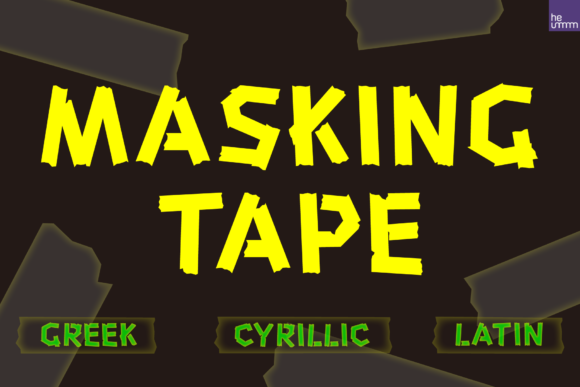
HU Masking Tape Font for Handmade Labels & Packaging
There is a specific moment in the product design process when everything just clicks. Last Tuesday, I was staring at a blank candle label template on my screen, trying to find a typeface that felt both industrial and warm. My usual scripts were too fussy for the matte black jars, and standard sans serifs felt cold and corporate. Then I typed "Lavender & Sage" into HU Masking Tape, and the design instantly came alive. The bold, thick letterforms had exactly the tactile quality I needed, mimicking the look of actual masking tape or stamped ink without feeling messy. It transformed a simple jar into something that looked like it belonged in a high-end boutique.
As makers and sellers, we know that typography is often the difference between a product that looks homemade and one that looks professionally crafted. HU Masking Tape is a display font that bridges that gap beautifully. Its visual personality is unapologetically bold yet retains a handmade charm that resonates with customers looking for authenticity. Whether you are designing packaging for physical goods or creating digital printables, this typeface brings a level of intentionality that elevates the entire brand identity.
Elevating Product Packaging and Physical Labels
When I started testing this font for my small business packaging, I noticed immediately how well it holds up in physical production. Display fonts can sometimes be tricky when scaled down for stickers or tags, but the thickness of HU Masking Tape ensures legibility even at smaller sizes. I used it for 2-inch round sticker labels on glass jars, and the letters remained crisp after printing on vinyl and applying them to curved surfaces. The weight of the font provides enough surface area for adhesive, which is a practical detail that matters immensely when you are hand-applying hundreds of labels during a holiday rush.
This typeface shines particularly bright in packaging design because it commands attention without screaming. For a recent batch of seasonal tote bags, I used HU Masking Tape for the main slogan while keeping the care instructions in a lighter weight font. The contrast created a hierarchy that guided the eye naturally. Customers could read the catchy phrase from across a market stall, while the finer details remained accessible up close. This balance is essential for apparel industry projects where readability and style must coexist. The font’s inherent texture suggests a hands-on manufacturing process, reinforcing the value of handmade goods to the buyer.
Digital Downloads and Printable Wall Art
Beyond physical products, HU Masking Tape has become a staple in my digital download shop. Creating printable wall art requires fonts that translate well from screen to home printer. I designed a set of nursery affirmations using this typeface, and the feedback highlighted how "friendly" and "grounded" the text felt. Because the letterforms are substantial, they print clearly even on standard cardstock without requiring professional-grade equipment. This accessibility makes it an excellent choice for creators selling editable templates or instant art files.
For planner pages and digital stickers, the bold nature of this font serves as a perfect organizational tool. I use it for monthly headers and category dividers because it creates distinct visual breaks on the page. Unlike delicate scripts that might get lost against colorful backgrounds or busy patterns, HU Masking Tape anchors the layout. When designing social media graphics or listing images for Etsy, this legibility translates to better engagement. Shoppers scrolling quickly on mobile devices can instantly parse the text, understanding what the product is before they even click. In the crowded marketplace of digital goods, that split-second clarity is invaluable.
Strategic Font Pairing for Brand Consistency
A single font rarely works alone, and finding the right partner for HU Masking Tape is key to maintaining brand consistency. Since this is such a strong, textured display font, it pairs best with cleaner, simpler counterparts. In my own branding, I match it with a minimalist sans serif for body copy and pricing information. The contrast between the rugged charm of the masking tape style and the sleek modernity of a geometric sans creates a sophisticated editorial look. This combination works exceptionally well for corporate identity materials, business cards, and thank-you inserts included in orders.
If your brand leans more romantic or traditional, try pairing HU Masking Tape with a refined script or handwritten font. Use the masking tape font for the primary headline—like "Happy Birthday" or "Save the Date"—and let the script handle the names or secondary details. This juxtaposition prevents the design from feeling too heavy or masculine while retaining that trendy, raw aesthetic. I recently applied this strategy to a wedding welcome board mockup; the bold titles provided structure, while the flowing script added elegance. Remember to check kerning and spacing carefully when mixing styles, as the unique character shapes of HU Masking Tape may require manual adjustment to sit harmoniously next to other typefaces.
Technical Considerations for Makers and Sellers
Before integrating any new creative font into your commercial workflow, it is vital to understand its technical capabilities and licensing. HU Masking Tape is designed primarily for short phrases, titles, logos, and headlines rather than long paragraphs of body text. Its bold construction means that setting entire blocks of copy can reduce readability and overwhelm the viewer. Reserve this typeface for moments where you want to make a statement, such as product names, sale announcements, or decorative quotes.
Always verify the specific file formats and licensing terms included with your purchase. If you plan to cut this font with a Cricut or Silhouette machine, ensure you have access to SVG or compatible vector files to avoid jagged edges. Check for multilingual support if you serve international customers or create bilingual packaging. Additionally, review the commercial license details carefully. While many fonts allow for physical end-products like mugs and shirts, some restrict usage in digital templates or logos intended for resale. Understanding these boundaries protects your business and ensures you are supporting the type designer ethically.
Finally, test your designs in real-world conditions before launching. Print a proof at actual size to check stroke width and negative space. What looks spacious on a 27-inch monitor might become clogged when printed at two inches tall. Test the font on different materials—matte paper, glossy vinyl, fabric, and wood—to see how the texture interacts with various substrates. This hands-on validation is what separates professional makers from amateurs. By treating HU Masking Tape not just as a digital asset but as a tangible component of your craft, you unlock its full potential to tell your brand's story with confidence and creativity.